Tuesday, February 8, 2011

Memory


Memory
– Any system – human, animal, or machine – that encodes, stores, and retrieves information

Human memory is good at
  • Information on which attention is focused
  • Information in which we are interested
  • Information that arouses us emotionally
  • Information that fits with our previous experiences
  • Information that we rehearse
Encoding: Involves modification of information to fit the preferred format of the memory system

Elaboration: Type of encoding in which meaning is added to information in working memory so that it may be more easily stored and retrieved

Storage: Involves retention of encoded material over time

Access and retrieval: Involves the location and recovery of information from memory


Sensory memory: Preserves brief sensory impressions of stimuli, also called sensory register

Testing sensory (iconic) memory
George Sperling's study


Iconic (visual) and echoic (auditory) sensory memory

Chunking: organizing pieces of information into a smaller number of meaningful units (or chunks)


Maintenance rehearsal: Process in which information is repeated or reviewed to keep it from fading while in working memory

Elaborative rehearsal: Process in which information is actively reviewed and related to information already in LTM

Levels-of-processing theory: Explanation for the fact that information that is more thoroughly connected to meaningful terms in LTM will be better remembered
(deeper processing=better memory)

Long term memory - Stores material organized according to meaning, also called LTM


Anterograde amnesia –Inability to form memories for new information

Retrograde amnesia –Inability to remember information previously stored in memory


Flashbulb memory: a clear and vivid long-term memory of an especially meaningful and emotional event


Implicit memory – Memory that was not deliberately learned or of which you have no conscious awareness

Explicit memory – Memory that has been processed with attention and can be consciously recalled

Recall – Technique for retrieving explicit memories in which one must retrieve previously presented information (example: fill in the blank test, seeing a picture of someone and remembering his/her name)

Recognition – Technique for retrieving explicit memories in which one must identify present stimuli as having been previously presented or learned (example: multiple choice test)

Encoding specificity principle –The more closely the retrieval clues match the form in which the information was encoded, the better the information will be remembered

Mood congruent memory: A happy moods is likely to trigger happy memories, depression perpetuates itself through biased retrieval of depressing memories

Forgetting

Transience: long-term memories gradually fade in strength over time

Absent-mindedness: Forgetting caused by lapses in attention

Proactive interference: previously stored information prevents learning and remembering new information

Retroactive interference: newly learned information prevents retrieval of previously stored material


Serial position effect: items in the middle of a sequence are less well remembered than items presented first or last (includes primacy effect and recency effect)

Persistence: difficulty putting unwanted memories out of one’s mind

Mnemonics – Techniques for improving memory, especially by making connections between new material and information already in long-term memory

Natural language mediators: words associated with new information to be remembered

Flash presentation
(on recall, recognition, and relearning)

Links from the Web Resources for this chapter from the Student Companion Site to Psychology in Action

Improving your memory

Tips and techniques for memory enhancement

Using memory principles to enhance your study skills

Elizabeth Loftus Homepage

New links (as of February 14)

Lecture on the classic study of eyewitness testimony by Loftus and Palmer

When Memory Lies (Elizabeth Loftus creates a false memory in Alan Alda)

Thursday, January 27, 2011

Learning (Chapter 6)

Learning – A process through which experience produces lasting change in behavior or mental processes

Classical Conditioning - a basic form of learning in which a stimulus that produces an innate reflex becomes associated with a neutral stimulus, which acquires the power to elicit the same response.


Video explaining classical conditioning


Extinction – Weakening of a conditioned association in the absence of an unconditioned stimulus or reinforcer

Spontaneous recovery –Reappearance of an extinguished conditioned response after a time delay


Little Albert regains his identity

Classics in the History of Psychology (Watson and Raynor)

Stimulus generalization

Stimulus discrimination

Taste-aversion learning – Biological tendency in which an organism learns to avoid food with a certain taste after a single experience, if eating it is followed by illness

Classical conditioning in advertising


The Law of Effect: the idea that responses that produced desirable results would be learned, or "stamped" into the organism


Operant Conditioning - rewards and punishments are consequences that influence the likelihood of the behaviors they follow recurring in the future.


Positive reinforcers –Stimulus presented after a response that increases the probability of that response happening again

Negative reinforcers – Removal of an unpleasant stimulus, contingent on a particular behavior

Link about reinforcement and punishment


Primary reinforcers: reinforcers, such as food and sex, that have an innate basis because of their biological value to the organism.

Secondary reinforcers: stimuli, such as money or tokens, that gain their reinforcing power by a learned association with primary reinforcers.

Continuous reinforcement

Partial reinforcement (also called intermittent reinforcement)


Extinction

Schedules of Reinforcement


  • Fixed Ratio

  • Variable Ratio

  • Fixed Interval

  • Variable Interval


Shaping: an operant learning technique in which a new behavior is produced by reinforcing behaviors that are similar to the desired response

Punishment

Positive punishment: the application of an aversive stimulus after a response

Negative punishment: the removal of an attractive stimulus after a response

Problems with punishment

  • Power usually disappears when threat of punishment is removed

  • Often triggers aggression

  • May inhibit learning new and better responses

  • Is often applied unequally
Alternatives to punishment


  • Extinction

  • Reinforcing preferred activities

  • Prompting and shaping

Insight learning – Problem solving occurs by means of a sudden reorganization of perceptions (Kohler)


Cognitive map – a mental representation of physical space (demonstrated by Tolman, who also demonstrated latent learning)

Observational learning


Overview of Observational Learning


Potential homework articles

Berkeley Police Rewards Good Drivers with Treats
Conditional Behavior at the Zoo
Positive reinforcement helps children avoid junk food

Wednesday, January 26, 2011

A quick recap of classical conditioning.


Cartoon explaining classical conditioning (Added February 15)

Saturday, January 15, 2011

Consciousness


Chapter 5

States of Mind


Conscious – Brain process of which we are aware

Nonconscious – Brain process that does not involve conscious processing (e.g. heart rate, breathing, control of internal organs)

Preconscious – Information that is not currently in consciousness, but can be brought into consciousness if attention is called to it

Unconscious – Many levels of processing that occur without awareness

Daydreaming – Mild form of consciousness alteration in which attention shifts to memories, expectations, desires, or fantasies, and away from the immediate situation

Sleep and Dreaming


Circadian rhythms

Jet lag

Rapid eye movements (REM)

Sleep paralysis


Non-REM (NREM) sleep

REM rebound

The Function of Sleep
  • To conserve energy
  • To restore body (neurotransmitters, neuron sensitivity)
  • To flush out useless information from the brain

Sleep debt –Deficiency caused by not getting the amount of sleep that one requires for optimal functioning

Why We Dream

Freud believed dreams served the following two functions:

  • To guard sleep
  • To serve as sources of wish fulfillment
  • Manifest and latent content

Dream content

  • Varies by culture, gender, and age
  • Frequently connects with recent experience
  • May help us form memories

Activation-synthesis theory – Theory that dreams begin with random electrical activation coming from brain stem; dreams are brain’s attempt to make sense of this random activity

Sleep Disorders


Insomnia – Involves insufficient sleep, the inability to fall asleep quickly, frequent arousals, or early awakenings

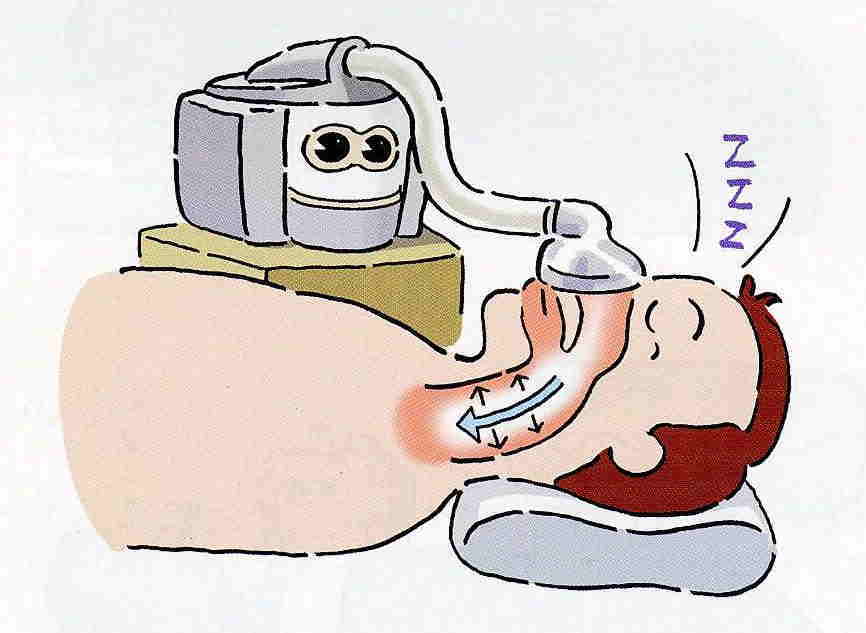
Sleep apnea – Respiratory disorder in which person intermittently stops breathing while asleep


Narcolepsy – Involves sudden REM sleep attacks accompanied by cataplexy


Cataplexy – Sudden loss of muscle control that occurs before narcoleptic sleep attack; waking form of sleep paralysis

Night terrors – The screaming of a child in deep sleep, who, once awakened, has no memory of what mental events might have caused the fear

An altered state of consciousness occurs when some aspect of normal consciousness is modified by mental, behavioral, or chemical means.

  • Hypnosis
  • Meditation
  • Psychoactive drug states
Hypnosis – Induced state of altered awareness, characterized by heightened suggestibility and deep relaxation

Hypnotic analgesia – Diminished sensitivity to pain while under hypnosis

Meditation – Form of consciousness change induced by focusing on a repetitive behavior, assuming certain body positions and minimizing external stimulation

Wednesday, January 12, 2011

Exam Prep Links/Resources

SQ3R - A reading and Study Skill System

(More concise version of a handout I gave you in class.)

Flash Presentation about Theoretical Perspectives in Psychology


Sensation and Perception

Synesthesia video
The Science of Picky Eaters (video)

More about synesthesia


Sensation: process of receiving, translating, and transmitting raw sensory data from the external and internal environments to the brain.

Perception: process of selecting, organizing, and interpreting sensory data into useful mental representations of the world.


Transduction – Transformation of one form of energy into another – especially the transformation of stimulus information into nerve impulses

Receptors –Specialized neurons that are activated by stimulation and transduce (convert) it into a nerve impulse

Sensory adaptation – Loss of responsiveness in receptor cells after stimulation has remained unchanged for a while


Absolute threshold – Amount of stimulation necessary for a stimulus to be detected

Difference threshold – Smallest amount by which a stimulus can be changed and the difference be detected (also called just noticeable difference – JND)

Signal detection theory
Perceptual judgment as combination of sensation and decision-making processes


Visual cortex –Part of the brain – the occipital cortex – where visual sensations are processed

Hearing


  • Pitch – Sensory characteristic of sound produced by the frequency of the sound wave

  • Loudness – Sensory characteristic of sound produced by the amplitude (intensity) of the sound wave

  • Timbre – Quality of a sound wave that derives from the wave’s complexity
Position and Movement


  • Vestibular sense –Sense of body orientation with respect to gravity


  • Kinesthetic sense –Sense of body position and movement of body parts relative to each other


Olfaction
: Sense of smell


Pheromones –Chemical signals released by organisms to communicate with other members of the species


Gustation: the sense of taste

Skin senses: touch, warmth, and cold

Pain and the placebo effect

Perceptual constancy – Ability to recognize the same object under different conditions, such as changes in illumination, distance, or location


(some examples are size and shape constancy)

Gestalt psychology – View that much of perception is shaped by innate factors built into the brain

Figure and Ground


Subjective contours – Boundaries that are perceived but do not appear in the stimulus pattern


Closure


Perceptual set


Depth Perception

Binocular cues
--retinal disparity and binocular convergence

Monocular cues
--relative size
--interposition
--relative motion

Stroop effect
Ames Room explanation
Ames Room diagram
Visual cliff experiment (video)
vision and art


Potential homework articles

Do the menstrual cycles of women living together tend to synchronize?
Finding the Perfect Mate: Male Pheromones and Female Attraction
Are there Human Pheromones?