Tuesday, March 1, 2011

Emotions and Motivation

Emotion –A four-part process consisting of physiological arousal, cognitive interpretation subjective feelings, and behavioral expression

Emotions have evolved to help us respond to important situations and to convey our intentions to others

People everywhere can recognize at least seven basic emotions:

  • sadness

  • fear

  • anger

  • disgust

  • contempt

  • happiness

  • surprise
Display rules –Permissible ways of displaying emotions in a particular society

Inverted “U” function – both low and high levels of arousal produce lower performance than does a moderate level of arousal


Sensation seekers – Individuals who have a biological need for higher levels of stimulation than do other people


James-Lange theory


Cannon-Bard theory

Two-factor theory of emotion – Emotion results from the cognitive appraisal of both (1) physical arousal and (2) emotion provoking stimulus


Emotional intelligence – Ability to understand and control emotional responses

Polygraph testing


Motivation – All processes involved in starting, directing, and maintaining physical and psychological activities

Drive – Biologically instigated motivation

Motive – Internal mechanism that directs behavior (often used to describe motivations that are learned, rather that biologically based)

Intrinsic motivation – Desire to engage in an activity for its own sake (personal enjoyment)

Extrinsic motivation – Desire to engage in an activity to achieve an external consequence (e.g. a reward)

Instinct theory – View that certain behaviors are determined by innate factors

Fixed-action patterns – Genetically based behaviors, seen across a species, that can be set off by a specific stimulus


Drive theory – View that a biological need (an imbalance that threatens survival) produces drive

Homeostasis – The body’s tendency to maintain a biologically balanced condition

Rotter's Internal and External Locus of Control

Locus of Control Test

Maslow's Hierarchy of Needs


Overjustification: the process by which extrinsic (external) rewards can sometimes displace internal motivation

Need for achievement (n Ach) – Mental state that produces a psychological motive to excel or reach some goal

Thematic Apperception Test (TAT): The subject is asked to tell the examiner a story about each card that includes the following elements: the event shown in the picture; what has led up to it; what the characters in the picture are feeling and thinking; and the outcome of the event.


Set point –Refers to the tendency of the body to maintain a certain level of body fat and body weight


Sexual scripts: socially learned programs of sexual interpretation and responsiveness

Thursday, February 24, 2011

Fa'afafine - Samoan boys brought up as girls

We're Only Human...: The "Super Uncles" of Samoa

Charting the Pacific - Fa'afafine - Samoan boys brought up as girls


Intelligence

Intelligence Testing

Alfred Binet developed the first intelligence test in 1904 (for what purpose?)

Original formula for calculating IQ

(Why would this formula underestimate the intelligence of older children?)


Normal distribution – Bell-shaped curve describing the spread of a characteristic throughout a population

Normal range – Scores falling in (approximately) the middle two-thirds of a normal distribution


Mental retardation –Often conceived as representing the lower 2% of the IQ range

Giftedness –Often conceived as representing the upper 2% of the IQ range

Savant syndrome: can be seen in individuals who have a remarkable talent in one area, while often mentally slow in others

Spearman's "g" (general intelligence)

Sternberg's Triarchic Theory

  • Practical Intelligence
  • Logical Reasoning

  • Experiential Intelligence
Gardner's Multiple Intelligences


  • Linguistic

  • Logical-mathematical

  • Spacial

  • Musical

  • Bodily-kinesthetic

  • Interpersonal

  • Intrapersonal
Heritability – Amount of trait variation within a group that can be attributed to genetic differences

Eugenics: a philosophy and a political movement that encouraged biologically superior people to intervreed and sought to discourage biologically inferior people from having offspring

Black Intelligence Test of Cultural Homogeneity

Tuesday, February 22, 2011

Nature versus Nurture


Give me a dozen healthy infants, well-formed, and my own specified world to bring them up in and I'll guarantee to take any one at random and train him to become any type of specialist I might select – doctor, lawyer, artist, merchant-chief and, yes, even beggar-man and thief, regardless of his talents, penchants, tendencies, abilities, vocations, and race of his ancestors. I am going beyond my facts and I admit it, but so have the advocates of the contrary and they have been doing it for many thousands of years.

John B. Watson


This statement expresses John Watson's belief that environment was everything in human development. He was saying could take any (essentially normal) baby and determine who and what that child would become--provided that he was able to have complete control over all elements of that child's environment.

Do you agree or disagree with Watson's idea that if it were possible (legal, ethical, etc.) to have complete control over all aspects of an infant's environment, you really could raise any child to enter whatever profession you chose for him or her?

This is going to be a discussion board topic. One thing I'd like you to start to think about is how one might go about Watson's unlikely experiment. If you wanted to raise a child to be a doctor--or a thief--what kind of environment would you set up? Think about things that might be done at the family level, choice of school, wider community and role models, and anything else you think might shape a child's destiny
.

Thursday, February 17, 2011

Developmental Psychology

Theoretical Issues: Ongoing Debates


  • Nature versus Nurture
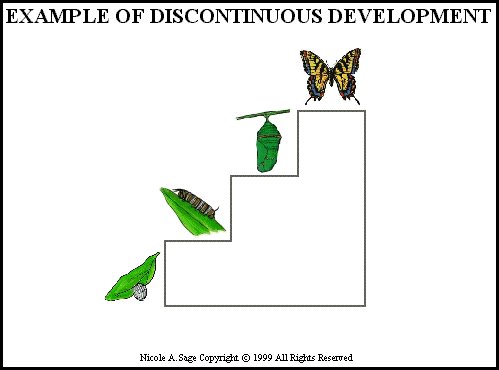
  • Continuity versus Stages


  • Stability versus Change


Prenatal development
  • Germinal period


  • Embryonic period


Fetal period


Early motor development


Cognitive Development

Schema –cognitive structures or patterns consisting of a number of organized ideas that grow and differentiate with experience

Assimilation – absorbing new information into existing schemas

Accommodation – adjusting old schemas or developing new ones to better fit with new information


Piaget's Stages of Cognitive Development

Sensorimotor stage

Birth to about age 2
Child relies heavily on innate motor responses to stimuli
Mental representations


Object permanence

Preoperational stage

--About age 2 to age 6 or 7
--Marked by well-developed mental representation and the use of language

Egocentrism (video)


Animistic thinking


Concrete Operational Stage
--About age 7 to about age 11
--Child understands conservation but is incapable of abstract thought


Conservation

Formal Operational Stage

--From about age 12 on
--Abstract thought appears


Theory of Mind

Imprinting (Konrad Lorenz)

Harlow's attachment study

Mary Ainsworth's Strange Situation

Temperament –An individual’s characteristic manner of behavior or reaction

Socialization –The lifelong process of shaping an individual’s behavior patterns, values, standards, skills, attitudes and motives to conform to those regarded as desirable in a particular society

Most approaches to child rearing fall into one of the following four styles:


Authoritarian parents: parenting style emphasizing control and obedience


Authoritative parents: parenting style blending respect for a child's individuality with an effort to instill social values


Permissive parents: parenting style emphasizing self-expression and self-regulation

Uninvolved parents


Erikson’s Psychosocial Stages (see handout)

Kohlberg’s Stages of Moral Reasoning

I. Preconventional morality
II. Conventional morality
III. Postconventional (principled) morality

Sunday, February 13, 2011

Thinking

Concept: mental representation of a group or category that shares similar characteristics

Natural concepts: formed by everyday experiences "I know one when I see one"

Prototype: a "good example" of a concept--one that comes to mind easily


Artificial concepts: formed by logical, specific rules

We organize much of our declarative memories into concept hierarchies


Algorithms: Problem-solving procedures or formulas that guarantee a correct outcome if applied correctly


Heuristics: Cognitive strategies used as shortcuts to solve complex mental tasks; do not guarantee a correct solution (some examples include working backwards, searching for analogies, and breaking the problem into smaller problems)

Obstacles to problem solving

Mental set: Tendency to respond to a new problem in the manner used for a previous problem

Functional fixedness: Inability to perceive a new use for an object associated with a different purpose


Confirmation bias: Ignoring or finding fault with information that does not fit our opinions, and seeking information with which we agree

Hindsight bias: tendency, after learning about an event, to believe that one could have predicted the event in advance

Availability heuristic: Faulty heuristic strategy that estimates probabilities based on information that can be recalled from personal experience

Links from the Web Resources for this chapter from the Student Companion Site to Psychology in Action

Concept Mapping Homepage

Center for Research on Concepts and Cognition